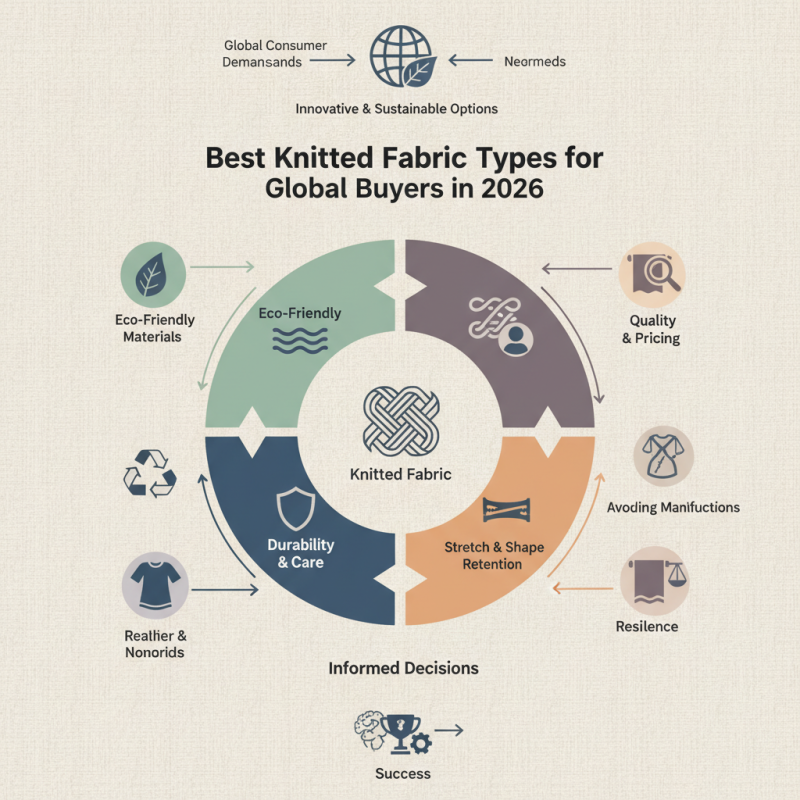
In the fast-evolving textile industry, "Knitted Fabric" plays a crucial role in meeting global consumer demands. By 2026, buyers will seek innovative and sustainable options in knitted materials. Different knitted fabric types offer unique benefits and challenges.
Understanding the various knitted fabric types will empower buyers to make informed choices. Brands must adapt to trends, such as eco-friendly materials, to remain competitive. Moreover, knowledge about fabric durability and care can impact customer satisfaction.
However, not all knitted fabrics are created equal. Some may stretch out of shape or fade quickly. It’s important for buyers to consider quality alongside pricing. This dynamic and unpredictable market necessitates ongoing research and adaptation. Embracing imperfections in knitted fabric choices can lead to unexpected discoveries. In the end, informed decisions are essential for success in the global knitting market.
As the demand for knitted fabrics rises, understanding their types is essential for buyers. Cotton blends are popular due to their softness and breathability. They offer comfort in various climates. Wool knits stand out in the colder months, providing warmth and insulation. Their natural fibers are luxurious and long-lasting.
Yarns like acrylic and polyester have gained traction for their affordability. They are easy to care for and often washable. However, they may lack the breathability of natural fibers. Sustainable options, like hemp and organic cotton, attract eco-conscious consumers. These fabrics are not only fashionable but also environmentally friendly.
Choosing the right knitted fabric requires careful consideration. Buyers must reflect on their specific needs and market trends. There is no one-size-fits-all solution. Each fabric type has unique characteristics and potential drawbacks. Knowing these can guide global buyers in making informed decisions.
In 2026, knitted fabrics will see significant transformations driven by market trends and consumer preferences. According to recent industry analysis, the global knitted fabric market is projected to grow at a compound annual growth rate (CAGR) of 5.2%. This growth reflects increasing demand for versatile and sustainable materials. Data from the Global Textile Report highlights that innovations in eco-friendly fibers are reshaping supplier strategies and consumer choices.
Demand for seamless knitting technology is also rising, with analysts noting a 30% increase in adoption rates. This method enhances comfort, decreases fabric waste, and fosters customization. Notably, the report reveals that nearly 40% of buyers prioritize fabric quality over cost, suggesting a shift in purchasing attitudes and a challenge for manufacturers to balance sustainability with affordability.
However, the industry faces hurdles, such as supply chain disruptions that can affect raw material availability. Furthermore, the growing preference for athleisure trends complicates fabric selection, as buyers seek performance without sacrificing style. These factors illustrate the complexities of the knitted fabric market and underscore the importance of responsive strategies in a rapidly evolving landscape.
In 2026, sustainable knitted fabrics are gaining attention among global buyers. Eco-friendly materials are increasingly desirable. Consumers are more conscious of their choices. They seek fabrics that minimize environmental impact. Natural fibers like organic cotton and bamboo are popular options. These materials reduce pollution and support healthier farming practices.
Recycling is another important aspect of sustainable fabrics. Recycled polyester, made from plastic bottles, is a great choice. It helps divert waste from landfills. However, the production process can be energy intensive, raising concerns. Understanding these nuances is vital for informed buying decisions.
Innovation in sustainable knitting continues to evolve. New bio-based materials are emerging, offering attractive alternatives. Yet, challenges remain. Not all eco-friendly fabrics are widely available. Sourcing quality sustainable materials can be difficult. Buyers must dig deeper to connect with reliable suppliers.
In 2026, knitted textiles will see exciting innovations, especially in performance fabrics. These fabrics are designed to meet the demands of today’s active lifestyles. For instance, moisture-wicking properties are becoming essential. Fabrics that keep the body dry during workouts are gaining popularity. They enhance comfort and performance, making them a top choice for athletes and casual wearers alike.
New developments in technology offer countless possibilities. Breathable materials combined with stretch capabilities can enhance movement. Fabrics now incorporate smart fibers that adjust to body temperature. This means greater versatility for different activities like sports or outdoor adventures. While these advancements are promising, they raise questions about sustainability. Not all innovations prioritize environmental impact, leaving room for improvement.
Many manufacturers are experimenting with recyclable materials in knitted fabrics. However, the challenge remains to balance performance with eco-friendliness. Creating a fabric that performs well and minimizes waste is a significant hurdle. As we refine these processes, the industry must reflect on the importance of sustainable practices. Balancing innovation with responsibility is crucial for the future of knitted textiles.
| Fabric Type | Composition | Key Features | Applications | Sustainability Rating |
|---|---|---|---|---|
| Recycled Polyester Knits | 100% Recycled Polyester | Lightweight, Moisture-wicking, Durable | Sportswear, Casual Wear | A |
| Merino Wool Knits | 100% Merino Wool | Breathable, Odor-resistant, Temperature-regulating | Outdoor Apparel, Base Layers | B |
| Organic Cotton Knits | 100% Organic Cotton | Soft, Hypoallergenic, Breathable | T-shirts, Baby Clothes | A+ |
| Nylon Blend Knits | 75% Nylon, 25% Spandex | Stretchy, Durable, UV-resistant | Activewear, Swimwear | B+ |
| Tencel Lyocell Knits | 100% Tencel | Silky feel, Moisture-wicking, Biodegradable | Fashion Apparel, Loungewear | A+ |
The global market for knitted fabrics has evolved significantly. By 2026, demand is expected to rise by 5% annually. This growth highlights the importance of understanding key suppliers in the industry. Insightful reports reveal North America and Asia as leading producers. Countries like China and Bangladesh dominate production, thanks to lower labor costs.
Sustainability is a growing concern among consumers. Reports indicate that over 60% of buyers prioritize environmentally friendly materials. This rising trend pushes suppliers to adopt sustainable practices. However, many still grapple with transparency in their supply chains. Only a fraction of manufacturers can guarantee fully sustainable processes.
Innovative technologies are reshaping production methods. Advanced knitting techniques result in lightweight and durable fabrics. However, challenges persist. Some suppliers struggle to keep up with rapid technological changes. Others find it hard to balance cost-efficiency with quality. Understanding these dynamics is crucial for global buyers aiming to navigate this complex landscape.
: Eco-friendly fabrics include natural fibers like organic cotton and bamboo. These options help reduce pollution.
Recycling helps divert waste from landfills. However, production of recycled polyester can be energy intensive.
Not all sustainable fabrics are easy to find. Buyers may need to search for reliable sources.
Demand is projected to grow by 5% annually. Sustainability drives many buyers' choices in fabrics.
Many suppliers struggle with transparency in their supply chains. Keeping up with technology is also difficult.
Understanding fabric choices reduces environmental impact. Educated buying leads to better overall sustainability.
Quality and sustainability should be top priorities. Sourcing reliable suppliers can be challenging.
Innovative techniques create lightweight and durable options. Yet, balancing cost with quality remains a challenge.
Over 60% of buyers prioritize sustainable materials. This trend encourages suppliers to change their practices.
No, only a small percentage can assure fully sustainable operations. Transparency remains a significant issue.
The article titled "Best Knitted Fabric Types for Global Buyers in 2026" provides a comprehensive overview of the various knitted fabric types that are gaining popularity among global buyers. It delves into market trends using data-driven insights, highlighting the evolving preferences and demands in the knitted fabric sector for the upcoming year. Furthermore, the piece emphasizes sustainable options, showcasing the rise of eco-friendly knitted fabrics that cater to environmentally conscious consumers.
Innovations in performance fabrics are also discussed, revealing advancements in knitted textiles that enhance functionality and aesthetics. Lastly, the article offers a detailed guide to key global suppliers of knitted fabrics, equipping buyers with essential information to make informed purchasing decisions. Overall, this article serves as a vital resource for anyone looking to navigate the knitted fabric market in 2026.