China Top Printed Net Fabric Manufacturer Supplier?

Time:2026-10-24 Author:Sienna
0%

Choosing a China top Printed Net Fabric manufacturer or supplier requires more than comparing online prices. The real question is simple: can the supplier produce stable quality at commercial scale? Printed net fabric may look delicate, yet its performance depends on yarn selection, mesh construction, dye control, and finishing accuracy.

Dr. Behnam Pourdeyhimi, a recognized nonwovens and textile-structure specialist, has emphasized, “Performance begins with structure, not decoration.” This principle fits Printed Net Fabric closely. A sharp floral pattern means little if the mesh stretches unevenly or the print cracks after washing. Experienced buyers should request physical samples, GSM data, roll-width details, and colorfastness reports. They should also inspect the fabric under strong light. Small pinholes, blurred edges, and irregular tension become obvious there.

Reliable Chinese suppliers usually explain their production process clearly. They can identify the knitting or weaving method, printing technology, finishing chemicals, inspection standard, and packaging protection. Ask whether the factory controls production directly or outsources key steps. That answer matters. Factory photographs are not enough. A sample order remains essential.

Price still matters. It should never lead the decision alone. A cheaper roll may create higher cutting waste, inconsistent shades, or delayed delivery. No supplier is perfect. Even strong manufacturers may need clearer communication about print scale, color references, and allowable defects. That is where careful buyers should reflect, revise specifications, and document every approval.

The strongest supplier is not simply the largest. It is the one that combines technical experience, transparent evidence, responsive communication, and repeatable Printed Net Fabric quality.
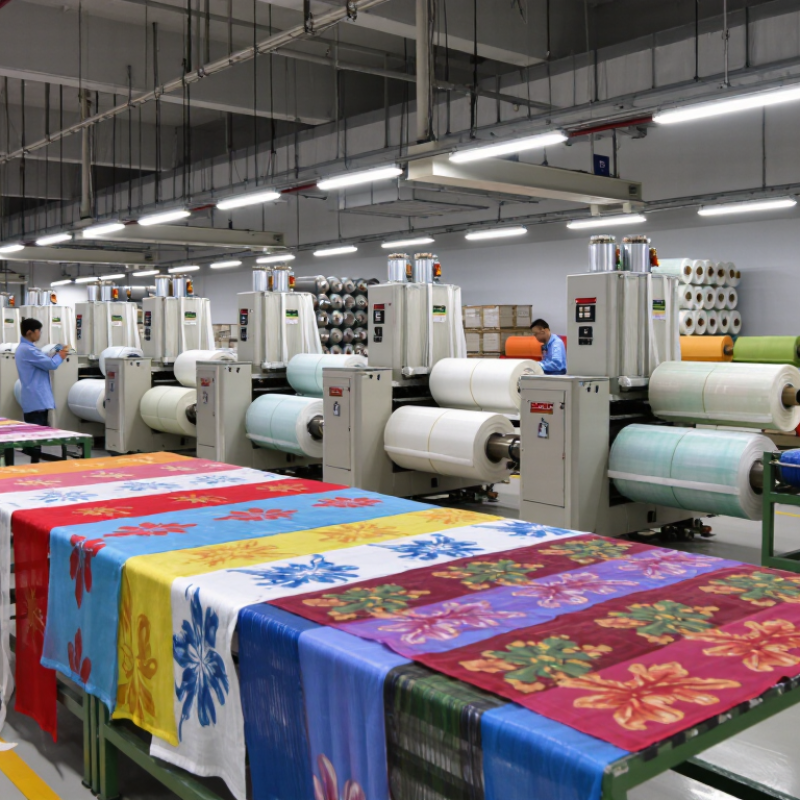
China Top Printed Net Fabric Manufacturer Supplier?

Printed Net Fabric Explained: Fiber Types, Mesh Count, GSM, and Print Methods

China Top Printed Net Fabric Manufacturer Supplier?

Printed net fabric is a lightweight mesh made from polyester, nylon, or recycled polyester. Polyester offers stable dimensions and sharp color reproduction. Nylon feels softer, but it can stretch more during heat setting. Textile Exchange’s 2024 Materials Market Report records global fiber production at 124 million tonnes in 2023. That scale explains why fiber selection affects both cost and environmental decisions.

Mesh count controls openness and surface detail. A coarse 40-mesh structure feels airy and suits overlays or decorative panels. Finer 80–120 mesh fabric supports cleaner motifs, but ink penetration becomes harder. GSM matters too. Fabrics around 30–60 GSM often create soft drape, while 80–140 GSM provides more body. These ranges are practical references, not universal rules. Actual results change with yarn diameter, coating, and finishing.

Print method changes the fabric’s hand. Rotary screen printing delivers strong coverage for repeated production. Discharge printing can create a softer appearance, but it requires careful fiber compatibility. Digital pigment printing reduces setup waste and supports short runs. A 2024 Smithers market analysis highlights continued growth in digitally printed textiles, driven by customization and shorter production cycles. Testing remains essential. Check wash fastness, crocking, stretch recovery, and edge curling before approval. I would not trust a bright sample alone. Heat can distort the mesh, and overly heavy ink may block its breathable openings.

China’s Net Fabric Industry: Production Clusters, Capacity, and Export Data

China Top Printed Net Fabric Manufacturer Supplier?

China’s net fabric industry is concentrated in several textile clusters. Zhejiang and Jiangsu support knitting, dyeing, and finishing networks. Fujian and Guangdong add strong garment and lace production capacity. These regions benefit from nearby ports, skilled technicians, and dense supplier connections.

Production is highly segmented. Some mills produce lightweight polyester mesh for apparel and sportswear. Others focus on embroidered net, tulle, or coated technical fabrics. Capacity changes with seasonal orders and energy costs. Public industry reports often estimate output through broader textile categories, not net fabric alone. This makes direct comparisons difficult.

China remains a major exporter of synthetic net fabrics. Customs data usually records these products under several textile and knitted-fabric codes. Export values can therefore differ between databases. Buyers should check the product composition, width, finishing process, and declared code before trusting a figure. That small detail matters.

Experienced sourcing teams often request lab dips, width records, and shrinkage tests. They also inspect mesh openings under consistent lighting. Printed designs may look sharp in samples but shift during bulk production. I have seen this risk underestimated. Better factories document color standards, tension settings, and inspection results. Still, no production system is perfect. Capacity claims need independent verification through factory visits, records, and repeat samples.

Comparing 20–200 GSM Fabrics by Openness, Strength, and End Use

China Top Printed Net Fabric Manufacturer Supplier?

Comparing 20–200 GSM Fabrics by Openness, Strength, and End Use

Printed net fabric should not be judged by GSM alone. Openness, tensile strength, and the final application must be reviewed together. Fabrics around 20–40 GSM usually offer high air permeability and a soft, open structure. They suit lightweight overlays, decorative panels, and temporary display graphics. However, their thin yarns can tear during sewing or repeated handling.

Materials from 50–100 GSM provide a more balanced structure. Their openings remain visible, while tensile performance improves. These grades often fit sportswear inserts, window screens, event backdrops, and breathable covers. At 100–200 GSM, the fabric feels denser and more stable. It can support larger printed surfaces, stronger seams, and longer outdoor exposure. Openness decreases, though. That trade-off is easy to overlook.

A reliable supplier should provide GSM tolerance, mesh counts, tensile data, tear strength, and print adhesion results. Ask for samples from the actual production line, not only showroom pieces. Check the fabric under backlight. Small aperture differences become obvious there. One practical mistake is choosing maximum strength while ignoring airflow requirements. A dense 180 GSM fabric may survive handling but perform poorly in a ventilated application. Printing also changes results. Heavy ink coverage can partially close openings and increase stiffness. Batch testing remains important because nominal specifications do not guarantee identical rolls.

Printed Net Fabric: 20–200 GSM Comparison

Lower-GSM fabrics generally provide higher air permeability and openness, making them suitable for lightweight lining, decorative mesh, and breathable apparel panels. Higher-GSM fabrics normally deliver greater tensile strength and are more appropriate for bags, upholstery panels, protective covers, and other demanding applications. Values shown are representative industry ranges for polyester or nylon printed net fabrics and should be confirmed through laboratory testing for a specific construction.

Quality Testing Through ISO 3801, ASTM D3775, and ISO 105-C06

China Top Printed Net Fabric Manufacturer Supplier?

A reliable printed net fabric supplier should prove quality with repeatable testing, not attractive samples alone. In daily production, small differences in yarn tension can change openness, weight, and print clarity. These details affect cutting, sewing, and final appearance.

ISO 3801 measures fabric mass per unit area. It helps confirm whether each lot matches the agreed weight. ASTM D3775 checks the number of courses and wales, revealing uneven construction across the roll. ISO 105-C06 evaluates colorfastness during washing, including staining and color change. Test results should identify the lot, conditioning time, equipment, and operator. Clear records build trust. However, one test cannot describe every fabric risk. Humidity, repeated washing, and storage conditions may still influence performance.

Tips: Request a pre-shipment report and compare it with the approved sample. Check fabric weight at several roll positions, not only the center. Ask how failed results are investigated. A responsible supplier should explain corrective actions without hiding inconvenient data. Small errors matter. Testing also has limits, so buyers should review test methods against the fabric’s actual end use. Consistent communication, documented controls, and honest rechecking are stronger signs of expertise than broad quality claims.

Choosing a Chinese Supplier by MOQ, Lead Time, Certifications, and Incoterms

China Top Printed Net Fabric Manufacturer Supplier?

Choosing a Chinese Supplier by MOQ, Lead Time, Certifications, and Incoterms

Choosing a printed net fabric supplier requires more than comparing prices. I check MOQ against the actual order plan, not an optimistic forecast. A factory may accept 500 meters, while custom printing requires 2,000 meters for stable color control. Ask whether the MOQ includes one design, one color, or the entire order.

Lead time should cover artwork approval, sampling, printing, inspection, and packing. For regular orders, 20 to 35 days may be realistic. Complex patterns can take longer. Request a written production schedule. I also recommend a physical sample, because screen images hide mesh stiffness, edge curling, and slight shade differences.

Verify certifications carefully. Check the certificate number, validity date, issuing body, and covered product scope. A general factory certificate may not apply to your printed fabric. Depending on the market, buyers may request OEKO-TEX, ISO 9001, or REACH-related documentation. Incoterms also affect the real cost. EXW offers control but adds local handling. FOB is often easier for sea shipments. CIF includes freight, yet destination charges remain. DDP sounds simple, but confirm tax responsibility and customs arrangements in writing. I have seen buyers overlook these details. The result was a cheaper quote with a higher landed cost. Even experienced teams misjudge lead time when artwork changes late. Keep approval records clear.

China Top Printed Net Fabric Manufacturer Supplier? - Choosing a Chinese Supplier by MOQ, Lead Time, Certifications, and Incoterms

Anonymized comparison of typical Chinese printed net fabric supplier profiles for preliminary sourcing evaluation

Evaluation Criteria Profile A
Stock-Supported Supplier
Profile B
Mid-Volume Custom Supplier
Profile C
Large-Scale Export Supplier
Profile D
Development-Focused Supplier
Typical Fabric Range Polyester printed net, mesh and tulle Polyester and nylon printed mesh fabrics Polyester net, power mesh and embroidered mesh Custom printed net, lace-effect mesh and stretch mesh
Common Fabric Width 150–160 cm usable width 150–180 cm usable width 150–190 cm usable width 140–180 cm usable width
Typical Weight Range 40–120 g/m² 50–180 g/m² 35–220 g/m² 45–160 g/m²
Minimum Order Quantity 500–800 kg per design 800–1,500 kg per design 1,500–3,000 kg per design 300–800 kg for approved developments
Sampling Policy Stock cards and small cuttings usually available Lab dips and strike-offs generally available before bulk production Formal sample approval required for custom production Development samples typically supported; sampling fees may apply
Typical Sample Lead Time 3–7 working days 7–12 working days 10–15 working days 10–20 working days depending on artwork and construction
Typical Bulk Lead Time 15–25 calendar days 20–35 calendar days 25–45 calendar days 25–40 calendar days after approval
Printing Methods Commonly Used Rotary screen printing and transfer printing Rotary screen, pigment and digital sampling Rotary screen, digital and sublimation printing Digital sampling followed by rotary screen production
Color Matching Usually matched to physical swatches or standard references Lab-dip approval recommended before production Bulk shade bands and lot-to-lot control commonly available Digital artwork and physical color approval recommended
Common Certifications or Standards OEKO-TEX® Standard 100 may be available by product line OEKO-TEX® Standard 100; ISO 9001 may be available OEKO-TEX® Standard 100, GRS or ISO 9001 may be available OEKO-TEX® Standard 100; recycled-content documentation may be available
Compliance Documents to Request Test report, composition statement and restricted-substance declaration Certificate scope, test report and production lot details Certificate validity, transaction certificate where applicable, and inspection report Material composition, colorfastness test and chemical compliance declaration
Recommended Quality Checks Width, GSM, print placement and colorfastness Width, GSM, shade variation, stretch recovery and print adhesion Full inspection, roll length, defect grading and laboratory testing Artwork accuracy, hand feel, stretch performance and wash testing
Typical Incoterms Offered EXW, FOB and sometimes CIF FOB, CIF and FCA FOB, CIF, CFR and DDP subject to destination review EXW, FOB and FCA; CIF available for regular routes
Best Use Case Small or medium orders requiring quicker delivery Fashion collections with moderate customization Large recurring orders and export programs New artwork, trial programs and product development
Main Purchasing Consideration Confirm available stock, lot consistency and actual printable quantity Confirm approval process and capacity during peak seasons Confirm minimum commitment, production queue and export documentation Confirm development charges, artwork ownership and scale-up pricing

Important: The figures shown are indicative Chinese market benchmarks for printed net fabric sourcing, not guaranteed offers from a specific supplier. Before placing an order, verify the current MOQ, production schedule, certification scope, testing requirements, payment terms and Incoterms in a written quotation.

Lead time normally begins after artwork, color, construction, payment and sample approval are completed. Certification availability depends on the specific factory, material composition, production line and shipment requirements.

FAQS

What fibers are commonly used for printed net fabric?

Polyester, nylon, and recycled polyester are common choices. Polyester holds its shape and reproduces colors sharply. Nylon feels softer but may stretch during heat setting.

How does mesh count affect printed fabric?

Mesh count controls openness and surface detail. A 40-mesh fabric feels airy and suits overlays. An 80–120 mesh fabric supports cleaner motifs but may resist ink penetration.

What does GSM tell me about net fabric?

GSM indicates fabric weight, not complete performance. Around 30–60 GSM usually drapes softly. Around 80–140 GSM provides more body. Yarn size and finishing can change these results.

Is a higher GSM always better?

No. Higher GSM can improve stability and seam strength. It can also reduce airflow. A dense 180 GSM fabric may perform poorly in a ventilated application.

Which GSM range suits lightweight decorative uses?

Fabrics around 20–40 GSM provide soft, open structures. They suit overlays, decorative panels, and temporary display graphics. Thin yarns may tear during sewing.

Which GSM range offers a balanced structure?

Materials around 50–100 GSM balance visible openings with better tensile performance. They can suit sportswear inserts, window screens, event backdrops, and breathable covers.

How do printing methods change fabric performance?

Rotary screen printing gives strong coverage for repeated production. Discharge printing can create a softer appearance. Digital pigment printing supports short runs and customization. Ink choice affects stiffness.

What tests should be completed before approval?

Check wash fastness, rubbing resistance, stretch recovery, edge curling, tensile strength, tear strength, and print adhesion. Test actual production samples. A bright sample alone proves little.

How can I inspect fabric openness accurately?

Hold the fabric against backlight. Small aperture differences become easier to see. Also compare several rolls, because nominal specifications may not match every batch.

What common mistake should buyers avoid?

Do not choose maximum strength while ignoring airflow. Heavy ink can block mesh openings. Heat may distort the structure. I would test again before final approval.

Conclusion

Printed Net Fabric is a lightweight, open-structure textile used in apparel, sportswear, linings, decoration, and technical applications. Its performance depends on fiber selection, such as polyester, nylon, or blended yarns, as well as mesh count, GSM, yarn thickness, and finishing. Lower-GSM fabrics generally provide greater openness and breathability, while higher-GSM options offer improved strength, coverage, and dimensional stability. Common printing methods include screen printing, heat transfer, sublimation, and digital printing, with the best choice determined by fiber content, design complexity, color requirements, and order volume.

China has developed extensive net fabric production clusters supported by spinning, knitting, dyeing, printing, and export capabilities. Buyers should compare 20–200 GSM fabrics according to openness, tensile strength, durability, and intended use, while requesting test results based on ISO 3801, ASTM D3775, and ISO 105-C06. When selecting a supplier, evaluate MOQ, sample quality, lead time, production capacity, certifications, inspection procedures, payment terms, and Incoterms to ensure consistent quality and reliable international delivery.


Sienna

Sienna

Sienna is a skilled marketing professional with a deep expertise in our company’s core products and services. With a passion for innovation and detail, she plays a pivotal role in crafting insightful blog posts that not only highlight the unique features of our offerings but also provide valuable......