Choosing Poly Net Fabric for global sourcing requires more than comparing color cards and quoted prices. A shiny sample can mislead. Buyers should verify polymer type, mesh opening, GSM, tensile strength, UV stability, coating, and edge construction before approving production.
Textile Exchange’s Materials Market Report 2024 estimates global fiber production reached about 124 million tonnes in 2023. Polyester represented approximately 57% of total output. This scale explains polyester’s availability, but it does not prove suitability for every application. The same report also highlights continuing concerns around fossil-based inputs, recycling, and traceability. Those issues should remain visible during supplier evaluation. The International Trade Centre’s market-analysis resources also show why destination markets, transport costs, and documentation can change the real landed price.
Dr. Subramanian Senthilkannan Muthu, a textile sustainability researcher, emphasizes: “Material choices must be assessed across the product’s complete life cycle, not by appearance alone.” That principle is practical. Request test reports, recycled-content evidence, restricted-substance declarations, and factory quality records. Confirm whether the stated recycled polyester is certified, traceable, and consistent between batches. Ask for a production sample, then test it under realistic heat, moisture, tension, and sunlight.
A lower price may hide weaker yarn or unstable dimensions. That is where my own sourcing judgment becomes less certain. Laboratory results help, but field performance still deserves attention. Poly Net Fabric should therefore be selected through documented testing, supplier experience, and clear communication about end use, volume, tolerances, and delivery risk.
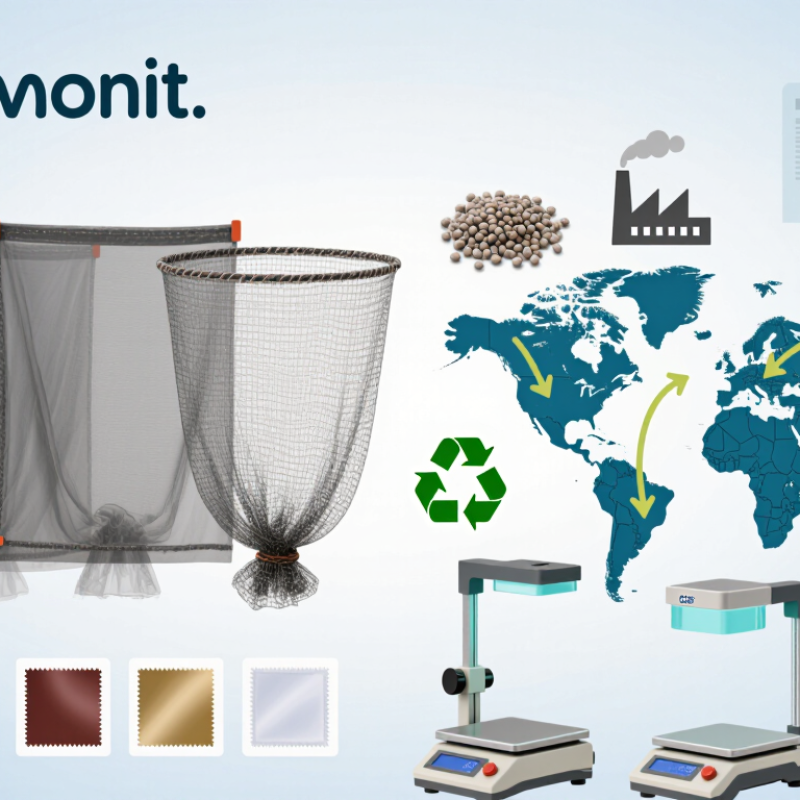
Poly net fabric is an open textile structure made from polymer yarns, usually polyester or polyethylene. Its mesh size, yarn thickness, coating, and knitting method control strength, airflow, light penetration, and abrasion resistance. In global sourcing, “poly net” is not a complete specification. A supplier may interpret it differently. That creates avoidable disputes.
Its applications are broad. Agricultural users select netting for crop protection, shade control, and produce handling. Industrial buyers use heavier mesh for separation, ventilation, safety barriers, and filtration support. Packaging manufacturers may choose lightweight net fabric for breathable bags or protective sleeves. Textile Exchange’s Materials Market Report 2024 states that global fiber production reached 124 million tonnes in 2023, with polyester representing about 57%. This scale supports wide availability, but it also makes traceability more difficult. UNEP warns that plastic waste could nearly triple by 2060 without stronger measures. End-of-life planning matters.
Tips: Ask for mesh opening, fabric weight, tensile strength, roll width, UV resistance, and coating details. Request production samples in real colors and humid conditions. Check shrinkage after washing or heat exposure. A lower quote may hide weaker yarns. I have seen specifications that looked precise but missed edge reinforcement. That small omission caused tearing during installation. Buyers should also request test methods, recycled-content evidence, and shipment inspection records. Supplier experience matters, but documented performance matters more.
Choosing poly net fabric for global sourcing starts with the end use, not the lowest quoted price. A greenhouse screen, sports barrier, laundry bag, and filtration panel demand different performance. Write the operating conditions before contacting suppliers. Record load direction, mesh opening, exposure time, moisture, temperature, cleaning method, and expected service life. These details prevent vague requests such as “strong and durable.” Good sourcing begins with measurable requirements.
For load-bearing applications, request tensile and tear strength data in both machine and cross directions. A fabric can resist pulling yet fail at a cut edge or stitched seam. Check abrasion results when the net will rub against frames, pallets, or clothing. Outdoor projects need UV resistance, color stability, and performance after repeated wet-dry cycles. Ask for mesh opening tolerance, fabric weight, coating adhesion, and shrinkage after heat exposure. Small changes matter. A two-millimeter opening difference can affect airflow, drainage, or product containment. Use samples in a simple field trial.
In practical sourcing work, I compare laboratory reports with handling tests and production samples. I look for consistent roll width, clean edges, odor, surface defects, and easy cutting. One imperfect sample taught me not to trust appearance alone; it felt firm but stretched under repeated tension. That weakness should have been tested earlier. Request test methods, sample conditioning, production tolerances, and inspection records. Independent verification is useful when the application is safety-sensitive or volumes are large. Keep a written specification and approve a reference sample before purchase orders. Even then, review performance after shipment and installation. Real conditions can expose assumptions.
Choosing poly net fabric for global sourcing starts with the material, not the lowest quotation. Polyester offers strong dimensional stability and better resistance to sunlight. Polypropylene is lighter and often suits economical, moisture-resistant applications. Nylon provides higher abrasion resistance, but it can absorb more moisture and cost more. Textile Exchange’s 2024 Materials Market Report recorded global fiber production at 124 million tonnes in 2023. That scale makes traceability and recycled-content verification increasingly important during supplier selection.
Mesh structure changes performance quickly. Open mesh improves airflow but reduces tear resistance. Tighter mesh supports filtration and shading, although it can trap heat. Compare denier, filament count, mesh opening, weight, width, and tensile strength together. Do not judge mesh by appearance alone. A practical sample test should include seam slippage, edge curling, abrasion, and dimensional change after washing. ISO 9237 can support air-permeability testing, while ISO 12947 helps evaluate abrasion resistance. These standards make supplier comparisons more credible.
Coatings require equal attention. PVC, acrylic, polyurethane, and silicone coatings can alter stiffness, grip, water resistance, and recyclability. Request coating weight, adhesion results, chemical composition, and aging data. A coated fabric may pass an initial inspection yet crack after folding or ultraviolet exposure. I once focused too heavily on mesh openness and underestimated coating brittleness. That was a costly assumption. Specify tolerances clearly, including weight, width, color difference, mesh count, and roll length. Require pre-shipment testing from an independent laboratory, but remember that one test cannot represent every production lot.
When sourcing poly net fabric globally, evaluate the supplier before comparing price. Textile Exchange’s 2024 Materials Market Report recorded 124 million tonnes of global fiber production in 2023. Polyester remained the dominant fiber category. This scale creates many options, but also uneven manufacturing control. Request a recent factory audit, business license, product samples, and customer references. Check whether the factory owns its knitting, dyeing, and finishing equipment. Outsourcing is not automatically risky, but hidden subcontracting can weaken traceability.
Quality should be measured, not promised. Ask for mesh opening, fabric weight, width, tensile strength, tear strength, colorfastness, and shrinkage results. Use recognized test methods, such as ISO 13934 for tensile strength and ISO 105 for colorfastness. For chemical safety, request relevant testing against restricted substances and applicable market rules. ISO 9001 can indicate a documented quality system, while ISO 14001 supports environmental management. A certificate is evidence, not proof. Verify its scope, validity, and issuing body.
Production capacity needs practical evidence. Compare monthly output, machine numbers, shift patterns, lead times, and peak-season utilization. The ITMF Global Textile Industry Survey has repeatedly shown demand volatility across textile markets, so a supplier’s “available capacity” may change quickly. Ask for a capacity plan tied to your forecast, not a general statement. A pilot order can expose weak edge control, inconsistent mesh, or late packing. One review may still miss problems. That is why pre-shipment inspection and lot-based testing remain necessary.
| Assessment Area | Key Dimension | Recommended Benchmark or Requirement | Evidence to Request | Warning Signs | Suggested Weight | Evaluation Rating |
|---|---|---|---|---|---|---|
| 1. Product Specification and Material Quality | ||||||
| Raw Material | Polymer composition | Confirm whether the fabric is 100% polyester, recycled polyester, or a polyester blend. The composition should match the purchase specification and end-use requirements. | Independent fiber-composition test, technical data sheet, and production batch records. | Unclear fiber content, unexplained blend variation, or material substitution without written approval. | 10% | Pass when verified |
| Fabric Construction | Mesh structure and dimensional stability | Define mesh opening, yarn diameter, fabric width, construction type, and allowable dimensional tolerance before sampling. | Approved laboratory sample, construction specification, width inspection report, and dimensional-stability test. | Mesh openings vary visibly, edges curl excessively, or the supplier cannot provide a controlled specification. | 8% | Check by sample |
| Weight and Thickness | GSM and thickness consistency | Set a target GSM and tolerance according to the application. A common commercial tolerance is approximately ±5% when agreed in advance, but technical applications may require tighter control. | GSM test results from multiple roll locations and calibrated weighing equipment records. | Only one test point is supplied, or finished rolls show significant weight differences. | 8% | Verify per lot |
| Mechanical Performance | Tensile and tear strength | Requirements should be established by direction, test method, and end use. Use the same laboratory method for supplier comparison. | Test report identifying specimen direction, conditioning, test method, and results. | Results are presented without test conditions, direction, or sampling information. | 10% | Must meet specification |
| Seam and Edge Performance | Fraying, selvedge, and sewing behavior | Edges should remain manageable during cutting and sewing. For finished products, request a sewing trial using the actual thread and machine settings. | Cutting and sewing trial, edge-fray observations, and approved pre-production sample. | Excessive fraying, broken yarns, skipped stitches, or unacceptable seam slippage. | 6% | Trial required |
| Color and Finish | Shade, hand feel, and finish uniformity | Approve a sealed color standard. Define acceptable shade variation, surface finish, softening treatment, coating, or flame-retardant treatment where applicable. | Lab dip or color swatch, signed approval sample, and finishing recipe or process-control record. | Color is approved only from photographs, or finish changes between sample and bulk production. | 7% | Approve in writing |
| Colorfastness | Resistance to washing, rubbing, perspiration, and light | Set minimum ratings according to the destination market and product use. Testing should be performed using an agreed standard method. | Recent colorfastness report from an independent or qualified laboratory. | Only internal visual inspection is offered, or the report does not identify the tested color and lot. | 7% | Test before order |
| 2. Supplier Qualification and Compliance | ||||||
| Quality Management | Documented quality-management system | An ISO 9001-certified system can support consistent process control, corrective action, traceability, and document management, although certification does not replace product testing. | Valid certificate, certification scope, issuing body, and latest audit or surveillance status. | Expired certificate, scope unrelated to textile production, or refusal to share verification details. | 8% | Preferred |
| Chemical Compliance | Restricted substances control | Require compliance with the chemical restrictions applicable to the destination market, including relevant requirements under REACH and product-specific regulations. | Current chemical test report, restricted-substance list, chemical inventory, and supplier declaration. | Generic declarations with no product or lot reference, or testing that excludes dyes and finishing agents. | 10% | Mandatory for many markets |
| Consumer Safety | Harmful-substance and safety certification | For consumer-facing textiles, an OEKO-TEX Standard 100 certificate may help demonstrate testing for harmful substances. Verify the certificate scope and product class. | Certificate number, validity, product scope, product class, and verification through the certification body. | Certificate belongs to a different fabric, color, facility, or expired production period. | 6% | Market dependent |
| Social Responsibility | Labor and workplace practices | Use a recognized social-compliance audit or equivalent buyer code covering working hours, wages, health and safety, and forced or child labor risks. | Recent third-party audit, corrective-action plan, worker-safety records, and facility policy documents. | Restricted factory access, inconsistent workforce records, or repeated unresolved critical findings. | 5% | Risk-based review |
| Traceability | Batch and raw-material traceability | Each shipment should be traceable to production date, yarn or raw-material lot, dyeing or finishing batch, inspection record, and packing list. | Lot numbering procedure, production records, inspection reports, and sample traceability exercise. | Supplier cannot trace a finished roll back to a production batch. | 5% | Required for control |
| 3. Production Capacity and Delivery Reliability | ||||||
| Manufacturing Capacity | Monthly output and available capacity | Confirm normal monthly output, current utilization, number of relevant production lines, and reserved capacity for peak periods. Capacity should be demonstrated for the specified mesh construction, width, and finish. | Capacity statement, production schedule, line list, and recent shipment history with sensitive commercial details removed. | Capacity figures are not linked to actual equipment or the supplier relies entirely on undisclosed subcontractors. | 8% | Validate physically |
| Lead Time | Sample, production, and replenishment lead time | Record separate lead times for development samples, lab approval, bulk production, inspection, and dispatch. Include time for material procurement and dyeing. | Written production calendar, historical delivery performance, and agreed order milestone plan. | One general lead-time figure is quoted without separating sampling, production, and shipping stages. | 7% | Measure actual performance |
| Minimum Order Quantity | MOQ by color, construction, width, and finish | Obtain separate MOQs for stock colors, custom colors, special widths, recycled yarn, coating, and other value-added processes. | Current MOQ and price-break schedule signed by the supplier. | MOQ changes after sampling or hidden surcharges for low-volume colors and custom finishes. | 4% | Confirm commercially |
| Backup Capability | Business continuity and alternate production | Assess backup power, spare equipment, alternate raw-material sources, disaster recovery, and documented contingency procedures. | Business-continuity plan, maintenance records, and emergency communication procedure. | Single-source dependency with no recovery plan or no communication protocol for disruptions. | 4% | Important for critical supply |
| 4. Inspection, Logistics, and Commercial Control | ||||||
| Inspection System | In-process and final inspection | Require written inspection criteria covering width, GSM, mesh uniformity, color, defects, roll length, packaging, and labeling. Use an agreed sampling plan for final inspection. | Inspection checklist, defect-classification guide, calibration records, and sample inspection report. | Inspection is limited to appearance, with no recorded measurements or defect limits. | 8% | Mandatory |
| Packaging | Roll protection and export packing | Use moisture-resistant protection, stable roll cores, clear roll labels, and packaging suitable for the transport route and storage conditions. | Packing specification, package photographs, roll-label template, and loading inspection record. | Rolls arrive crushed, damp, telescoped, mislabeled, or without lot identification. | 3% | Confirm by trial shipment |
| Shipping Documentation | Commercial and technical documentation | Documents should consistently identify product description, fiber composition, quantity, net and gross weight, lot number, country of origin, and applicable test reports. | Sample commercial invoice, packing list, certificate of origin where needed, and technical document pack. | Inconsistent descriptions or missing lot information can create customs and traceability problems. | 3% | Required |
| Corrective Action | Response to nonconformities | Supplier should provide root-cause analysis, containment, corrective action, responsible personnel, and a completion date for quality issues. | Redacted corrective-action reports and evidence of effectiveness checks. | Supplier blames transport or the buyer without investigation and repeatedly offers temporary fixes. | 4% | Review history |
| Commercial Transparency | Pricing and change control | Quotation should identify fabric construction, width, GSM, color, finish, MOQ, packing, payment terms, validity period, and change-notification requirements. | Detailed quotation, approved specification sheet, and written change-control procedure. | Low initial price excludes testing, packing, special finish, or later material substitutions. | 4% | Compare like for like |
| 5. Recommended Sourcing Decision | ||||||
| Sample Approval | Development and pre-production sample | Approve a physical sample that represents the intended yarn, mesh, width, GSM, color, finish, packaging, and labeling before bulk production. | Signed sample approval, sealed reference swatch, and pre-production test report. | Bulk production begins from a digital image or an unapproved substitute sample. | Required gate | Pass / Hold |
| Independent Verification | Pre-shipment testing and inspection | Use an independent laboratory or inspection service for the first order, new construction, new color, new facility, or any high-risk shipment. | Independent inspection report, laboratory report, sample list, and photographs of inspected rolls. | Supplier controls all samples and refuses independent inspection. | Required gate | Recommended |
| Final Score | Weighted supplier evaluation | Use a 100-point scorecard. A practical approval threshold is 80 points or higher, provided that chemical compliance, product safety, and critical quality requirements have no major failure. | Completed scorecard, risk register, approved specification, and management sign-off. | A high total score is used to override a failed mandatory compliance or safety requirement. | 100% | Approve / Conditional / Reject |
| Note: Certification requirements, test methods, labeling rules, and restricted-substance limits depend on the destination country, end use, and product category. Always confirm the current legal requirements and the exact scope of each certificate before placing a production order. | ||||||
When sourcing poly net fabric globally, price per kilogram rarely tells the whole story. Compare mesh opening, yarn thickness, roll width, weight, and usable yield. A cheaper roll may contain more edge waste or uneven tension. Request a landed-cost sheet covering packing, inland transport, customs handling, insurance, and storage. Ask suppliers to quote identical specifications. Otherwise, comparisons become misleading.
Freight planning needs physical detail. Confirm roll diameter, core size, pallet pattern, and moisture protection before booking container space. Poly netting can consume volume before reaching the weight limit. Small folding changes may affect freight costs. Build time for sampling, inspection, port congestion, and document corrections. I once focused too heavily on unit price. That decision created expensive delays. The lesson was useful, but not elegant. Forecasts are never perfectly right.
For compliance, verify fiber composition, labeling, chemical restrictions, and application-specific performance requirements in each destination market. Request current test reports from qualified laboratories, not copied files from old orders. Keep batch records, inspection criteria, and corrective-action reports. Check whether the factory can reproduce color, mesh size, and tensile strength across several lots. A certificate can expire. Production discipline matters more. Review capacity, raw-material availability, maintenance records, and backup processes. A second approved source may cost more initially, but it can protect delivery during equipment failure or seasonal demand. Keep realistic safety stock. Suppliers should also confirm lead times in writing, including production and export-document preparation.
Polyester offers strong dimensional stability and better sunlight resistance. Polypropylene is lighter and often suits economical, moisture-resistant uses. Nylon resists abrasion well but absorbs more moisture and may cost more.
Open mesh improves airflow but usually reduces tear resistance. Tighter mesh supports filtration and shading. However, it may trap heat.
Compare denier, filament count, mesh opening, fabric weight, width, and tensile strength. Also check tear strength, shrinkage, colorfastness, and roll length. Appearance alone can mislead.
Test seam slippage, edge curling, abrasion, washing shrinkage, and dimensional change. Fold the sample repeatedly and inspect the edges. Small details matter.
Ask for coating weight, adhesion results, chemical composition, and aging data. Coatings can change stiffness, grip, water resistance, and recyclability. Folding may reveal brittleness.
Request a recent factory audit, business license, product samples, and customer references. Check whether the factory controls knitting, dyeing, and finishing internally. Outsourcing is not automatically risky.
Confirm the certificate’s scope, validity, issuing body, and tested product. Request results for weight, width, tensile strength, tear strength, and colorfastness. A certificate is evidence, not proof.
Compare machine numbers, monthly output, shift patterns, lead times, and seasonal utilization. Ask for a capacity plan linked to your forecast. “Available capacity” can change quickly.
A pilot order can expose uneven mesh, weak edges, inconsistent color, or late packing. Use independent pre-shipment inspection and test separate production lots. One review can miss problems.
Large fiber markets make traceability increasingly important. Request material origin records and recycled-content verification where applicable. I once trusted a material claim too quickly. That assumption needed stronger evidence.
Choosing Poly Net Fabric for global sourcing starts with understanding its role in the intended application, such as filtration, agriculture, packaging, construction, protection, or industrial processing. Buyers should define the required strength, flexibility, air or water permeability, abrasion resistance, temperature tolerance, and service life before comparing options. Material type, mesh design, yarn structure, coating, opening size, weight, width, and color can all influence performance and suitability.
A reliable sourcing decision also requires careful supplier evaluation. Review quality-control procedures, testing capabilities, relevant certifications, production capacity, lead times, and consistency across batches. Total cost should include material pricing, customization, packaging, transportation, duties, and potential inspection expenses. Buyers should also confirm product compliance with applicable regulations and environmental requirements in the destination market. Clear specifications, sample testing, transparent communication, and contingency planning can reduce supply risks and support stable long-term cooperation. By balancing technical performance, supplier reliability, logistics, compliance, and overall value, companies can select Poly Net Fabric that meets both project needs and global procurement expectations.