Choosing the best Stretchy Polyester Fabric starts with the intended garment, not the fabric label alone. A fitted sports top needs strong recovery, while travel trousers may require softer stretch and better drape. Fabric weight, knit structure, polyester quality, and elastane content can change performance significantly. A smooth surface may look attractive, yet it can reveal pilling after repeated friction. Details matter.
In practical fabric evaluations, I check stretch in both directions and measure recovery after gentle pulling. I also examine the fabric under bright light for uneven loops, thin areas, or color variation. Fit matters. A useful sample test includes washing, drying, bending, and rubbing the material against a rough bag strap. Watch what happens next. Does the fabric return to its original shape? Does it feel clammy during movement? Does the color remain stable?
Reliable selection also requires more than touch. Ask suppliers for fiber composition, fabric weight, shrinkage data, colorfastness results, and production tolerances. Certifications such as OEKO-TEX can support chemical safety claims, but they do not guarantee comfort or durability. Independent testing may be worthwhile for uniforms, activewear, or large production orders. No single fabric suits every application. That is the part many buying guides simplify too much.
A thoughtful comparison should balance stretch, recovery, breathability, abrasion resistance, care requirements, appearance, and price. Testing three similar samples often reveals differences that photographs cannot show. The “best” choice may still involve compromise, especially when softness conflicts with long-term shape retention. This guide explains how to assess those trade-offs with clearer evidence and fewer expensive surprises.
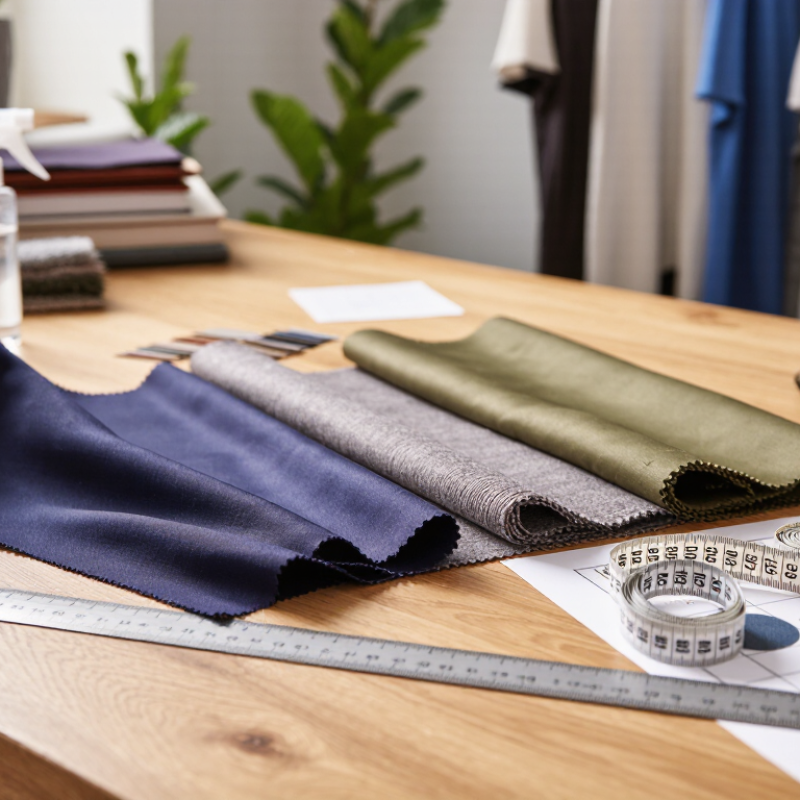
Stretchy polyester is not one material behavior. Polyester fibers offer strength, low moisture absorption, and quick drying, but they are not naturally highly elastic. Stretch usually comes from elastane, knitted construction, or textured yarns. The difference appears when you pull a waistband, bend a knee, or sit for hours. Look for two-way or four-way stretch, then check stretch recovery. Textile Exchange’s Materials Market Report 2024 recorded 124 million tonnes of global fiber production in 2023. Polyester represented about 57 percent. That scale makes quality selection more important, not easier.
For practical buying, compare fabric weight, fiber blend, recovery, pilling resistance, and colorfastness. A fabric may feel soft initially yet bag at the elbows after repeated wear. Test a 10-centimeter section: stretch it gently, release it, and measure how quickly it returns. Ask for laboratory results based on recognized methods, such as ISO 6330 for washing or ISO 12945 for pilling. Also inspect the surface under strong light. Dense, even loops can improve stability, although construction may defeat a good blend. I have found this step useful, but it is not perfect. Home testing cannot replace controlled laboratory testing.
Tips: Choose elastane content according to movement, not marketing language. For everyday trousers, moderate stretch and strong recovery often outperform extreme softness. Wash a sample before ordering bulk fabric. Heat can weaken elastic recovery over time. Keep records of blend, weight, test conditions, and supplier claims. Small details matter.
How to Choose the Best Stretchy Polyester Fabric?
The right stretch level depends on movement, fit, and fabric recovery. A fitted sports top usually needs four-way stretch for bending and reaching. A skirt may only need crosswise stretch for comfortable walking. For light movement, 10% to 20% stretch can be enough. Active garments often perform better with 30% to 50% stretch. Check both directions before making a decision.
Measure a 10-centimeter fabric section. Stretch it gently without forcing the fibers. If it reaches 12 centimeters, the fabric has 20% stretch. Repeat this test across the grain and lengthwise. Recovery matters just as much. Release the fabric and observe it for several minutes. Quality material should return close to its original size. A permanent ripple may indicate poor recovery.
I have found that numbers alone can mislead. A fabric may stretch well but feel too firm against the skin. Another may feel soft but lose shape at the knees. Test a small sample with your actual pattern. Sew a waistband, sleeve, or side panel first. Wash it as the final garment will be washed. Polyester usually resists shrinking, but heat can affect elastic fibers. That detail is easy to overlook. Consider seam tension too, because excessive stitching can restrict movement. A slightly imperfect sample often reveals more than a fabric specification sheet.
| Stretch Category | Typical Fiber Composition | Stretch Direction | Typical Fabric Stretch | Recovery Characteristics | Common Fabric Weight | Suitable Applications | Best Choice When |
|---|---|---|---|---|---|---|---|
| Low Stretch | 100% polyester or polyester with minimal elastane | Usually one-way or limited crosswise stretch | Approximately 5–15% | Good dimensional stability with limited give | Light to medium: about 80–180 g/m² | Blouses, linings, uniforms, structured skirts, casual woven garments | You need shape retention, easy sewing, and a relatively structured fit. |
| Moderate Stretch | Polyester with approximately 3–5% elastane | One-way or two-way, depending on construction | Approximately 15–30% | Generally good recovery for everyday movement | Medium: about 150–250 g/m² | Trousers, fitted dresses, workwear, skirts, travel clothing | You want a balance between comfort, durability, and a clean appearance. |
| High Stretch | Polyester with approximately 8–12% elastane | Commonly four-way stretch | Approximately 30–50% | Good to very good recovery when properly knitted and finished | Medium to heavy: about 180–300 g/m² | Activewear, leggings, dancewear, fitted sports tops, performance garments | The garment must support repeated movement and fit closely to the body. |
| Very High Stretch | Polyester with approximately 12–20% elastane or a highly elastic knit structure | Four-way stretch with strong crosswise and lengthwise extension | Approximately 50–80% or more | Very good recovery is required; quality varies significantly by fabric construction | Medium to heavy: about 220–350 g/m² | Compression garments, high-mobility sportswear, swimwear, theatrical costumes | Maximum freedom of movement or body-contouring performance is essential. |
| Stretch Woven | Polyester woven with elastane or mechanical stretch yarns | Often crosswise stretch; some constructions provide two-way stretch | Approximately 10–30% | Usually better structure than a stretch knit, with moderate recovery | Medium to heavy: about 180–320 g/m² | Stretch trousers, jackets, uniforms, outdoor pants, structured dresses | You need a tailored appearance with extra comfort and ease of movement. |
| Stretch Knit | Polyester knit, optionally blended with elastane | Often two-way or four-way, depending on knit structure | Approximately 20–80% | Ranges from moderate to excellent; test for bagging after repeated extension | Light to heavy: about 100–350 g/m² | T-shirts, leggings, base layers, sportswear, dresses, loungewear | Soft hand feel, drape, and comfort are more important than a tailored silhouette. |
Choosing stretchy polyester fabric starts with fabric weight. Lightweight material, around 120–170 gsm, feels cool and suits shirts or warm-weather training. Medium weights, roughly 180–240 gsm, provide better coverage for leggings, uniforms, and fitted dresses. Heavy fabric can resist wear, but it may hold heat. I have found that a sample reveals more than a specification sheet. Bend it, pull it, and check whether the surface turns shiny.
Texture affects comfort and appearance. A smooth knit slides easily under layers, while a brushed surface feels softer against skin. Ribbed textures can hide minor wrinkles, though they may stretch unevenly. Look for consistent loops and clean recovery after five pulls. Breathability depends on fiber construction and fabric weight. Open knits release heat faster, but they can snag more easily. Moisture-wicking finishes help, yet they are not magic. Sweat may still linger in dense polyester.
Tips: Hold the fabric near a window. If light passes through unevenly, inspect the knit closely. Place a small sample against your forearm for one minute. Notice heat, roughness, and cling. Wash it once before ordering large quantities. This step is easy to skip, and that is exactly why mistakes happen. A perfect choice on paper may feel wrong in motion.
Stretchy polyester is widely used because it balances flexibility, strength, and cost. Textile Exchange reported that polyester represented about 57% of global fiber production in 2023. That scale does not guarantee quality. Fabric construction still matters.
Check durability through fiber content, fabric weight, and recovery after stretching. A dense knit should return smoothly after repeated pulling. Look for abrasion results tested under ISO 12947, especially for uniforms or active clothing. However, test conditions may not match daily wear. A lab result is not a promise. I have seen lightweight fabric pass testing but develop shiny areas near pockets.
Care instructions reveal practical quality. Polyester usually tolerates regular washing, but high heat can damage elastane and weaken stretch recovery. Wash at a moderate temperature, reduce tumble drying, and avoid excessive fabric softener. The American Association of Textile Chemists and Colorists uses AATCC TM61 for accelerated laundering evaluations. One test cycle can represent several home washes, but household results still vary.
Color retention deserves equal attention. Ask for colorfastness results using AATCC or ISO 105 methods. Dark shades need careful testing because dye transfer and fading appear sooner. Rub a damp white cloth against the fabric. A faint mark is a warning. Light exposure can also change color, particularly in outdoor garments. Certification helps, yet it cannot replace checking the actual fabric. Stretching may expose lighter inner yarns, an easy detail to miss.
Choosing stretchy polyester begins with its intended use, not the fabric label. A running top needs quick drying, balanced recovery, and low cling. A dance costume needs softer drape and repeated elongation. Workwear may need abrasion resistance more than maximum stretch.
57%
Textile Exchange’s Materials Market Report 2024 records polyester at 57% of global fiber production in 2023, or roughly 71 million tonnes.
71 million tonnes
That scale makes careful selection important.
For close-fitting sportswear, consider polyester blended with elastane and a knitted construction. Test a 10-centimeter strip. Stretch it to 15 centimeters, release it, and measure it after one minute. A large permanent change suggests weak recovery. It is only a practical screen. ASTM D2594 and AATCC 135 can support laboratory testing, but washing trials remain essential. Moisture-wicking claims also deserve caution; fabric performance can change after repeated laundering.
Swimwear needs strong recovery, colorfastness, and resistance to chlorine and sunlight. A compact, heavier fabric often feels more secure. Lightweight polyester may suit lining or warm-weather shirts, but it can become transparent under tension.
For uniforms, check abrasion, pilling, and seam behavior. WRAP’s Valuing Our Clothes report estimates that extending clothing life by nine months can reduce carbon, water, and waste footprints by about 20–30%.
I would not choose recycled content alone. A lower-impact fiber still fails when the fabric loses shape quickly. Sample testing can reveal that uncomfortable mistake.
Polyester fibers are strong, quick-drying, and low in moisture absorption. Stretch usually comes from elastane, knitted construction, or textured yarns. Polyester alone is not highly elastic.
Two-way stretch expands mainly across one direction. Four-way stretch expands across both length and width. Four-way movement often suits active clothing better.
Mark a 10-centimeter section and stretch it gently to 15 centimeters. Release it, then measure the fabric after one minute. A large permanent change suggests weak recovery. It is only a rough screen.
Choose a knitted blend with moderate elastane and strong recovery. The fabric should dry quickly without clinging excessively. Test it after washing. Performance may change.
Look for strong recovery, colorfastness, and resistance to sunlight and pool chemicals. A compact, heavier fabric can feel more secure. Lightweight fabric may become transparent under tension.
Check abrasion resistance, pilling, colorfastness, and seam behavior. Stretch is not always the main priority. A durable fabric may feel less soft.
Yes. A soft fabric may bag at elbows or knees after repeated wear. Heat can weaken elastic recovery over time. Wash a sample before ordering large quantities.
Not always. Lower-impact fiber can still fail if the fabric loses shape quickly. Consider durability, washing needs, and service life together. Longer wear matters.
Choosing the best Stretchy Polyester Fabric begins with understanding how its fiber structure affects stretch, recovery, softness, strength, and moisture management. First, determine the amount of elasticity your project requires, since activewear, fitted garments, costumes, and everyday clothing may need different levels of flexibility. Consider whether the fabric should provide gentle comfort or strong support, and check how well it returns to its original shape after repeated movement.
Fabric weight, surface texture, and breathability are also important factors. Lightweight materials may feel cooler and more flexible, while heavier options can offer better coverage and structure. Before making a decision, evaluate durability, resistance to pilling, washing requirements, drying methods, and color retention. Finally, match the fabric to its intended use by balancing comfort, appearance, performance, and maintenance. A carefully selected Stretchy Polyester Fabric can provide long-lasting wear, reliable movement, and a polished finish when its properties suit the demands of the final product.