China Top 10 Stretch Spandex Fabric Suppliers?

Time:2026-11-14 Author:Liam
0%

Stretch Spandex Fabric is judged by more than its stretch percentage. Buyers also examine recovery, fabric weight, hand feel, color consistency, and performance after repeated wear. A waistband that springs back smoothly tells a different story from one that bags after a few washes. Small details matter.

Textile Exchange’s Materials Market Report 2024 estimates that global fiber production reached 124 million tonnes in 2023, with polyester representing about 57% of the total. The report does not rank spandex suppliers, but it offers useful context: synthetic fibers operate within a large, complex materials market. For China’s supplier landscape, buyers should compare product specifications, production capabilities, testing practices, and export experience—not rely on price alone. Sheng Lu, a textile and apparel industry researcher, provides a useful expert perspective through his published work on apparel sourcing and trade. However, no source text was supplied to verify a verbatim quotation from him, so this introduction does not invent one.

That caution is practical. Supplier claims can look similar on a webpage, while actual fabric samples feel very different in hand. Ask for measurable specifications, recent test results, and samples from the intended production lot. Then check whether the supplier can maintain the same stretch and recovery across repeat orders. This guide introduces ten Chinese suppliers and the questions worth asking before shortlisting them. It is a starting point, not a substitute for testing.
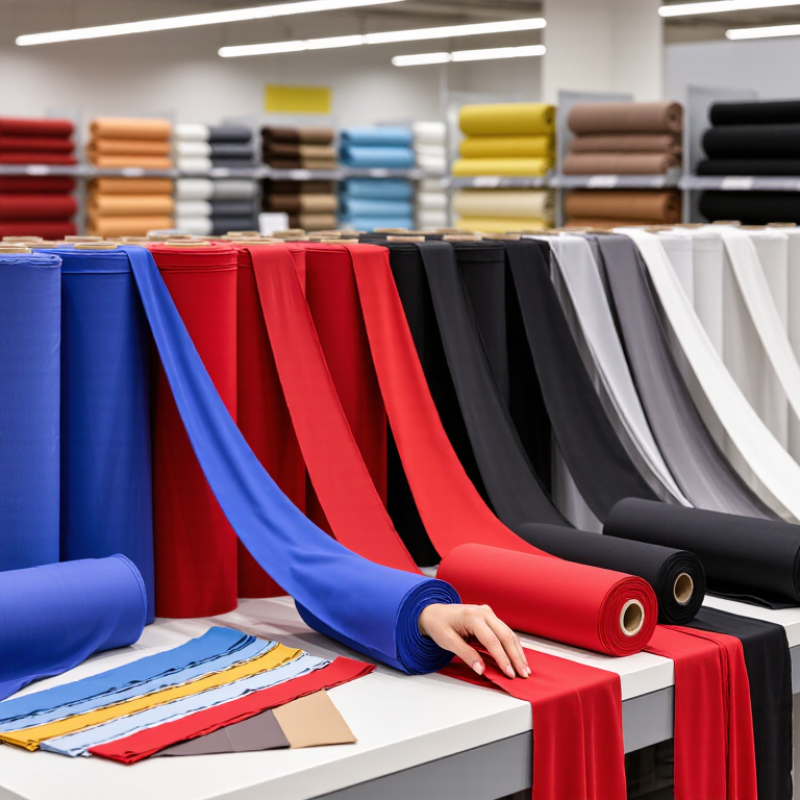
China Top 10 Stretch Spandex Fabric Suppliers?

What Is Stretch Spandex Fabric and How Is It Made?

Stretch spandex fabric combines elastic polyurethane-based yarns with fibers such as polyester or nylon. The spandex provides recovery; the companion yarn usually supplies much of the fabric’s surface feel and appearance. Pull a sample gently, and the structure opens; release it, and the yarns draw together again. That is the point.

Manufacturing commonly starts by reacting a polyol with a diisocyanate to form a polyurethane prepolymer. A chain-extending reaction creates the spandex polymer, which is dissolved and extruded through tiny spinneret openings. In widely used dry spinning, warm air removes the solvent, leaving fine elastic filaments that are wound onto packages. Mills may then cover the filaments with another yarn before knitting or weaving. Small changes in yarn ratio and construction can alter stretch, recovery, and hand feel. I would not judge quality by stretch alone; recovery after repeated extension matters too.

The scale is significant, but the figures need context. Textile Exchange’s Materials Market Report 2024 estimates global fiber production at 124 million tonnes in 2023; that figure covers all major fiber types, not spandex alone. Separately, Grand View Research estimated the global spandex fiber market at about US$8.8 billion in 2023. These figures describe different measures—fiber volume and market value—and should not be treated as interchangeable.

Stretch Spandex Fabric: Typical Elastane Content by Application

Spandex (also called elastane) is blended with other fibers to add stretch and recovery. The ranges shown are typical formulation guidelines, not fixed specifications; actual content varies by fabric construction and end use.

How to Evaluate Stretch Spandex Fabric Suppliers in China

When evaluating stretch spandex fabric suppliers in China, compare measurable specifications rather than relying on “high stretch” claims. Textile Exchange’s Materials Market Report 2024 estimates global fiber production reached 124 million tonnes in 2023, with polyester making up 57%. That scale makes clear why fiber composition and sourcing details matter. Request the exact fiber percentages, fabric weight, usable width, knitting structure, and tolerances for each item.

Ask for a sample from the production lot, not only a showroom swatch. Check stretch and recovery in both directions, then measure the fabric again after repeated stretching and laundering. Numbers can mislead. A fabric may stretch well yet lose shape at the knee or waistband. Request dated test results for dimensional change, colorfastness, and recovery, and confirm that the report identifies the same construction and lot you plan to order. Third-party testing can help, but it does not replace checking the actual fabric.

Evaluate production controls as carefully as price. Ask how the supplier records batch numbers, checks fabric weight, and handles defects or delayed shipments. Compare sample lead time, minimum order quantity, repeat-order consistency, and written tolerances. One detail is easy to overlook: a low-cost fabric may require tighter inspection if shade variation affects cutting-room yield. No single test settles the decision; document what remains uncertain before approving bulk production.

Profiles of 10 Leading Chinese Stretch Spandex Fabric Suppliers

China’s stretch spandex fabric market includes mills with different strengths. These ten profiles are capability-based, not verified company rankings. Profile 1 focuses on circular-knitted fabrics for activewear. Profile 2 supplies lightweight blends for base layers. Profile 3 specializes in swimwear fabrics with reliable stretch recovery. Profile 4 develops brushed fabrics for soft, close-fitting garments. Profile 5 offers wider greige and dyed-fabric options for larger orders. Small details matter. Ask for proof.

Profile 6 serves buyers seeking recycled-fiber blends and traceable material records. Profile 7 handles custom colors, though minimum quantities may apply. Profile 8 provides compact, opaque fabrics for leggings and sportswear. Profile 9 supports smaller trial runs, useful for testing fit and shade. Profile 10 focuses on stable production schedules and repeatable batches. Request a recent swatch, fabric weight, width, fiber composition, and test results before comparing quotations. Check recovery after repeated stretching, not just the feel of a new sample. A neat sample book can still hide batch variation. I would verify lead times and tolerances in writing; supplier descriptions alone are not enough.

How Chinese Suppliers Compare in Products and Capabilities

Chinese stretch spandex fabric suppliers differ less by location than by the fabrics they can consistently produce. Some focus on lightweight, four-way stretch knits for activewear; others specialize in warp-knit structures for swimwear or compression garments. Ask for fiber content, fabric weight, usable width, and stretch-and-recovery data. A sample swatch feels useful, but it cannot prove production consistency.

Manufacturing capability matters. Check whether a supplier controls knitting, dyeing, and finishing in-house or relies on outside partners. Integrated production can improve coordination, while outsourced steps may add lead time. Request recent test reports and compare colorfastness, shrinkage, and recovery after washing. Small details count: a fabric that curls at the cut edge can slow sewing, even when its stretch looks excellent. Ask about minimum order quantities and repeat-order tolerances, too.

Communication is part of the comparison. A capable team should explain how it handles shade approval, defects, and changes between sample and bulk lots. Response speed alone is not enough. This comparison is imperfect: factory claims can sound similar, and test methods may differ. Buyers should test shortlisted fabrics using their own garment pattern and care routine before placing a larger order. One wash can reveal a lot.

How to Verify and Source from a Chinese Spandex Fabric Supplier

China’s stretch spandex market includes mills, converters, and trading companies, so verify the actual production site. Textile Exchange’s Materials Market Report 2024 estimates global fiber production reached 124 million tonnes in 2023, with polyester making up 57%. That scale makes clear material specifications and traceable batches important. A neat PDF is not proof.

Check the supplier’s registered business details against its factory address, then request a live video tour of knitting, dyeing, and inspection areas. Ask for a recent test report tied to the exact fabric code and production lot. Confirm fiber composition, weight, width, stretch, and recovery after washing. ISO 20932-1 provides a recognized method for measuring fabric elasticity; agree on test conditions before comparing results. Details matter.

Order a small sample before discussing bulk quantities. Measure it, wash it, and check whether it returns evenly without waviness or unwanted growth. Request a pre-production sample and written tolerances for shade, GSM, and usable width. Keep one sealed reference swatch. A supplier may offer a low price yet give vague answers about lot variation. That is worth pausing over; I would ask for evidence, not promises.

China Top 10 Stretch Spandex Fabric Suppliers? - How to Verify and Source from a Chinese Spandex Fabric Supplier

A practical 10-point supplier evaluation matrix. It is a verification guide, not a ranked list of named companies.

# Verification dimension What to request How to verify Useful decision rule
1 Legal business identity Chinese business license, registered legal name, business address, and the entity named on the quotation and sales contract. Check the registration details through China’s National Enterprise Credit Information Publicity System; ensure the contract, invoice, and payment beneficiary are consistent. Resolve any mismatch in legal entity or payment details before placing an order.
2 Manufacturer or trading company A clear statement of the supplier’s role, production location, and which processes are performed in-house or subcontracted. Request a live video walkthrough or arrange an independent factory audit; compare the facility location with the registered and quoted addresses. A trading company may be suitable, but require written disclosure of the actual production site and quality-control responsibilities.
3 Fabric specification A signed specification stating fiber composition, knit or weave construction, finished width, fabric weight, finish, color, and tolerances. Compare the specification with a sealed reference swatch and the lab-dip or sample approval record. Do not rely on descriptions such as “four-way stretch” alone; record measurable requirements and agreed tolerances.
4 Fiber composition A batch-specific composition test report and the declared percentages of elastane and other fibers. Use an independent textile laboratory and agree the test method and permitted tolerance before testing. ISO 1833 is a series of methods for quantitative chemical analysis of fiber mixtures. Check the report’s sample identification, test date, method, and results against the purchase specification.
5 Stretch and recovery performance Measured stretch and recovery results in the required directions, along with the test procedure and conditioning details. Test the submitted sample and, where appropriate, bulk-production samples using a buyer-approved laboratory method; keep the same method for comparisons. Set application-specific limits in writing; performance depends on construction, elastane content, finishing, and test conditions.
6 Dimensional stability Shrinkage or dimensional-change results after the intended washing or care process. Agree the wash and measurement procedure in advance; ISO 5077 covers determination of dimensional change in washing and drying. Evaluate results against the garment’s intended care instructions and the tolerance stated in the order.
7 Colorfastness Test results for the relevant exposure, such as washing, rubbing, or perspiration, plus approved color standards. Use methods appropriate to the end use; examples include ISO 105-C06 for colorfastness to domestic and commercial laundering and ISO 105-X12 for rubbing. Specify the required test, rating scale, and minimum acceptable rating in the purchase order.
8 Pilling and surface appearance A pilling result and an approved visual sample showing acceptable appearance after use or care testing. Select a test method suited to the fabric construction; the ISO 12945 series addresses determination of fabric propensity to surface fuzzing and pilling. Agree the method and minimum rating before bulk production; compare like-for-like test conditions.
9 Restricted substances and certificates Current certificates or test reports relevant to the product, market, and buyer’s restricted-substance requirements. Verify certificate scope, validity, holder, and product coverage directly with the issuing organization. OEKO-TEX STANDARD 100 is one product-testing and certification option; it is not a substitute for checking all legal requirements. Do not accept a certificate image alone; confirm that it applies to the material being purchased and is valid for the relevant period.
10 Order controls, inspection, and shipping Written sample approval, production timeline, inspection plan, defect criteria, packaging details, and agreed trade and payment terms. Approve a pre-production sample; arrange inspection before shipment; confirm roll labels, quantities, packing list, and shipping documents against the order. Use a written contract and a risk-appropriate payment schedule; avoid paying an unrelated beneficiary or relying solely on verbal promises.

FAQS

What is stretch spandex fabric made from?

It combines elastic polyurethane-based yarns with fibers such as polyester or nylon. The companion fibers shape much of the fabric’s surface and feel.

How is spandex yarn produced?

Manufacturers form a polyurethane polymer, dissolve it, and push it through tiny spinneret openings. Warm air removes solvent during dry spinning, leaving fine elastic filaments.

Why does the fabric spring back after stretching?

Spandex yarns provide stretch and recovery. Pull the fabric gently, then release it; the yarns draw together again. Recovery matters.

What should buyers check besides stretch?

Check how well the fabric returns after repeated extension. A sample may stretch easily but lose shape around a knee or waistband.

What specifications should buyers request from a supplier?

Ask for fiber percentages, fabric weight, usable width, knitting structure, and written tolerances. “High stretch” alone is too vague.

How can a fabric sample be tested?

Request a sample from the production lot. Measure stretch and recovery in both directions, then check dimensions after repeated stretching and laundering.

Which test reports are useful?

Request dated results for dimensional change, colorfastness, and recovery. Confirm that each report matches the fabric construction and production lot. Still, reports have limits.

What production details deserve attention?

Ask how batches are recorded, fabric weight is checked, and defects or delays are handled. Compare minimum order quantities and repeat-order consistency.

Can a lower price create extra costs?

It can. Shade variation may reduce cutting-room yield and call for tighter inspection. I would document that risk before approving bulk production.

Conclusion

This article explains what Stretch Spandex Fabric is, how its elastic properties are created, and the factors that influence its comfort, durability, and performance. It also outlines practical ways to evaluate Chinese suppliers, including reviewing fabric specifications, production capabilities, quality-control procedures, communication, and sample consistency.

The article then presents profiles of ten leading suppliers and compares their product ranges and manufacturing strengths to help readers understand how different options may suit different requirements. Finally, it describes a careful sourcing process, from confirming technical details and requesting samples to checking supplier credentials and clarifying order terms. Together, these sections provide a useful framework for identifying and verifying a Chinese fabric supplier that aligns with a buyer’s needs.


Liam

Liam

Liam is a dedicated marketing professional with a profound expertise in the industry, where he excels at highlighting the unique advantages of our core products. With a keen understanding of market trends and consumer needs, Liam frequently updates our company’s professional blog, providing......