Choosing an Embroidered Netting Fabric supplier is rarely as simple as comparing price lists. Buyers must examine embroidery precision, mesh stability, thread quality, production capacity, and delivery performance. A beautiful sample can still fail during cutting, sewing, washing, or long-distance shipping.
Textile researcher and author Sandy Black observes, “Textiles are everywhere, and they touch everybody’s life.” Her statement reflects the practical importance of fabric selection. Embroidered netting appears in bridal veils, eveningwear, curtains, accessories, and decorative panels. Each application demands a different balance of softness, strength, transparency, and surface detail.
This guide presents ten leading Embroidered Netting Fabric suppliers worldwide. The selection considers manufacturing experience, design development, customization, quality control, export capability, and communication. Some suppliers specialize in delicate floral motifs. Others focus on sequins, metallic threads, raised embroidery, or large-volume production. Their strengths are not identical.
That matters.
A supplier with excellent samples may offer limited color matching. Another may provide attractive pricing but slower sampling. These differences deserve attention before placing an order. Certifications, minimum quantities, lead times, and testing practices should also be checked directly. Website claims alone are not enough.
The list is designed as a practical starting point, not a permanent verdict. Markets change. Factories improve. Customer experiences can vary by season and order size. Readers should request current samples and confirm specifications before making a final decision. That small step may prevent costly surprises later.
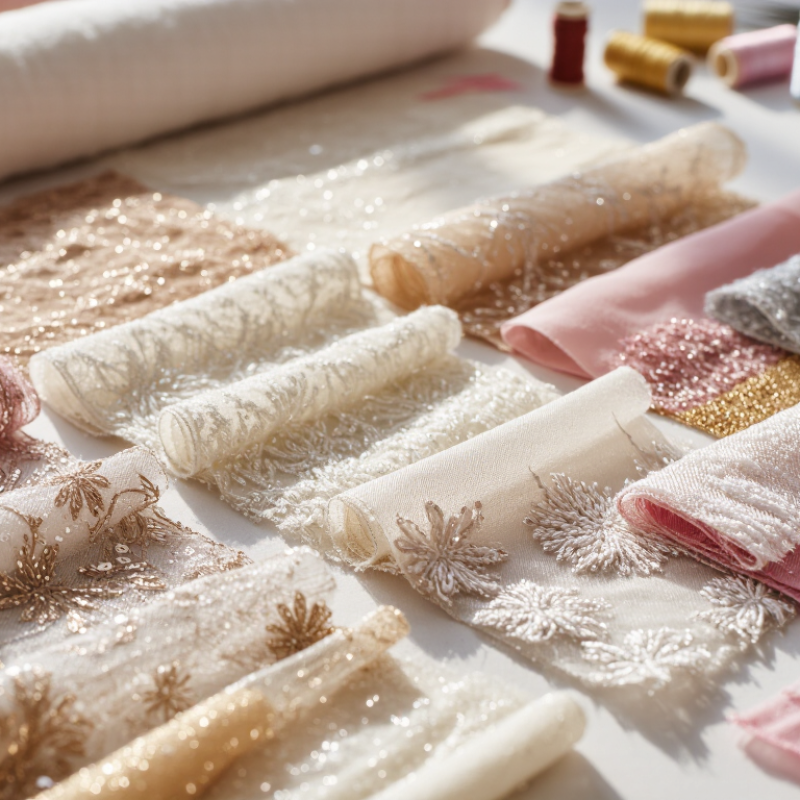
What Defines a High-Quality Embroidered Netting Fabric Supplier
A high-quality embroidered netting fabric supplier proves performance beyond an attractive sample. The supplier should disclose fiber content, mesh count, fabric weight, embroidery density, and production tolerances. A reliable technical sheet makes comparison easier. It also supports traceability from yarn selection to final inspection.
Textile Exchange’s Materials Market Report 2024 estimated global fiber production at 124 million tonnes in 2023. It projects approximately 160 million tonnes by 2030. This growth increases pressure on suppliers to document materials and reduce waste. Buyers should request test results for colorfastness, dimensional stability, pilling, snagging, and seam strength. For delicate netting, a 10-centimeter cut sample can reveal uneven tension, loose threads, or distorted embroidery. Small details matter.
Ask for laboratory-dip approval, batch records, and pre-shipment inspection photographs. Third-party testing aligned with ISO methods adds credibility, but certificates alone are not enough. A perfect-looking swatch can hide inconsistent rolls. I have seen suppliers pass visual checks yet fail after washing. That risk deserves attention. A capable supplier explains corrective actions, communicates delays early, and keeps approved samples for comparison. Responsiveness is part of quality. So is honesty. The strongest partner may admit a limitation instead of promising everything.
How the Top 10 Global Suppliers Are Selected and Ranked
How the Top 10 Global Suppliers Are Selected and Ranked
Ranking the top ten embroidered netting fabric suppliers requires more than checking catalog photographs. I would combine factory audits, verified shipment records, sample tests, and customer references. Production capacity receives 25% of the score. Quality consistency receives another 25%. The remaining points cover delivery reliability, customization, traceability, pricing, and technical support. A supplier must show repeatable embroidery, stable mesh tension, clean edges, and color accuracy under daylight testing.
Industry data also shapes the ranking. Textile Exchange’s 2024 Materials Market Report recorded about 124 million tonnes of global fiber production in 2023. Polyester represented roughly 57% of that volume. Therefore, recycled-content options and clear fiber documentation deserve attention. The ITMF Global Textile Industry Survey has reported continuing demand pressure and inventory concerns across textile markets. Flexible minimum order quantities and realistic lead times now matter more than impressive factory size.
The evaluation uses documented evidence, not marketing claims. Auditors review needle maintenance, inspection records, worker training, wastewater controls, and packaging conditions. Independent laboratory testing checks composition, colorfastness, shrinkage, and tear strength. Suppliers gain higher scores when they provide recent certificates and traceable batch records. Public information remains uneven. That is a weakness. A large facility may still deliver inconsistent motifs, while a smaller workshop may offer better sampling discipline. The ranking is reviewed after trial orders, because factory visits alone cannot reveal every production problem.
Profiles of the Top 10 Embroidered Netting Fabric Suppliers
Top 10 Embroidered Netting Fabric Suppliers Worldwide
Profiles of the Top 10 Embroidered Netting Fabric Suppliers
The leading embroidered netting fabric suppliers differ in scale, technique, and production focus. Supplier One specializes in delicate bridal netting with fine floral embroidery. Supplier Two serves eveningwear makers and offers metallic thread details. Supplier Three focuses on soft tulle for children’s clothing and lightweight accessories. Supplier Four produces wider industrial rolls for garment factories. Supplier Five is known for custom motifs and small-batch sampling. Supplier Six develops stretch netting for fitted dancewear and stage costumes. Supplier Seven supplies dense embroidery for curtains, panels, and decorative interiors. Supplier Eight emphasizes recycled fibers and documented material sourcing. Supplier Nine provides fast digital sampling for seasonal collections. Supplier Ten combines traditional machine embroidery with hand-finished edges.
In my experience, reliable suppliers explain fabric weight, mesh openness, embroidery density, and usable width clearly. They should provide physical samples, color references, washing guidance, and test reports when requested. A polished catalog is not enough. Delivery records matter. One overlooked detail is backing stability; weak support can distort flowers after cutting. I have also found that color matching under showroom lighting can mislead buyers. That needs a second check. No supplier is perfect, and quality can vary between production batches.
Tips:
Request a one-meter sample before placing a large order. Check snag resistance, edge fraying, and thread tension by hand. Ask whether the embroidery pattern repeats consistently across the full roll. Compare lead times, minimum quantities, packaging methods, and replacement policies. Keep written specifications for every approved sample.
Regional Strengths and Product Specialties of Leading Suppliers
Regional strengths matter more than a simple “top 10” ranking. China remains strong in high-volume embroidered tulle, automated patterns, and quick color matching. India offers detailed cotton embroidery, sequins, and hand-finished effects. Türkiye is valued for elastic netting and fast fashion production. Italy and France focus on luxury motifs, fine meshes, and complex three-dimensional embroidery.
Southeast Asian suppliers often support efficient garment production near major apparel factories. The United States and the United Kingdom are better suited to sampling, niche orders, and technical development. Textile Exchange’s Materials Market Report 2024 states that polyester represented about 57% of global fiber production in 2023. This supports demand for durable polyester netting, but recycled content and traceability now influence purchasing decisions. Grand View Research’s lace market analysis also identifies fashion apparel and home textiles as major application areas. Product specialization still varies sharply by region.
Tips: Ask for a 30-centimeter swatch, test stretch recovery, and check embroidery backing. Confirm shrinkage after washing. Request fiber certificates and batch records. A low price can hide unstable mesh tension or uneven thread density. Rankings remain imperfect because capacity, compliance, and design skill are rarely measured together. Suppliers should be judged against the buyer’s actual use, not a universal list.
How to Compare Prices, Quality, Customization, and Delivery Terms
When comparing the top embroidered netting fabric suppliers worldwide, price should never stand alone. Request a landed-cost quotation per meter, including sampling, packaging, freight, duties, and possible waste. A low quote can still be expensive. Check minimum order quantities and payment stages, too.
Quality needs measurable evidence. Ask for fabric weight, mesh opening, embroidery density, colorfastness, shrinkage, and pilling results. Independent testing should reference standards such as ISO 105-C06 and ISO 12947. Textile Exchange’s 2024 Materials Market Report estimated global fiber production at 124 million tonnes in 2023. This scale increases pressure for traceable fibers and clearer material declarations. Ask whether recycled content has verifiable documentation, not only a sales claim. Samples reveal more.
Customization should cover yarn composition, embroidery repeat, border width, backing, color matching, and digital artwork approval. Record every revision. One overlooked change can alter the fabric’s drape and final cost. Delivery terms deserve the same scrutiny. Compare production lead time, inspection windows, Incoterms, shipment frequency, and remedies for late delivery. UNCTAD’s Review of Maritime Transport 2024 notes that shipping carries over 80% of global trade by volume, so port disruption can affect even carefully planned orders. Require a realistic capacity statement and a written contingency plan. Supplier comparisons remain imperfect when forecasts change, but documented tests and transparent terms make judgment more reliable.
Conclusion
This guide explores what makes a dependable Embroidered Netting Fabric supplier, focusing on material quality, embroidery precision, production capacity, ethical manufacturing, communication, and consistent customer service. It explains how leading global suppliers can be selected and ranked through practical criteria such as product reliability, customization options, technical expertise, delivery performance, certifications, and overall value. The article also presents profiles of ten supplier types without promoting specific brand names, highlighting the qualities that distinguish experienced manufacturers from less established sources.
In addition, the guide compares regional strengths and product specialties, including differences in design capabilities, fabric construction, finishing techniques, and order flexibility. Buyers will learn how to evaluate pricing beyond the initial quote by considering fabric durability, sampling costs, minimum order quantities, customization, packaging, lead times, and delivery terms. By using these comparisons, fashion, bridalwear, décor, and apparel businesses can identify a suitable supplier that balances quality, creativity, dependable service, and long-term production needs.

 WEIJIN TEXTILE